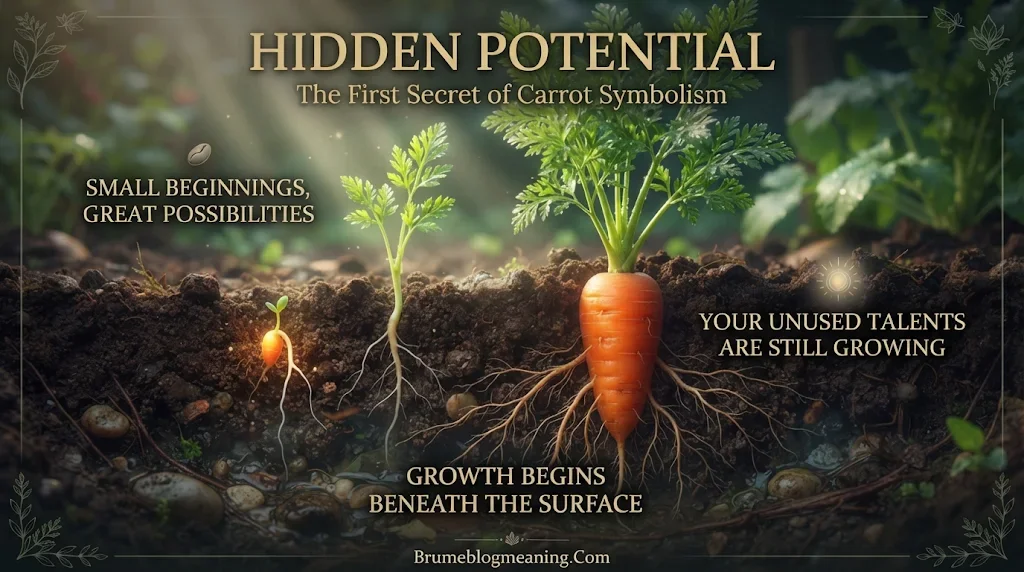
Carrot symbolism starts underground. The root grows in the dark, then shows its bright orange color at harvest.
That is why the spiritual meaning of carrots is about hidden growth. This guide covers 7 Meaning of Carrot Symbolism, the Bible question, and the famous carrot analogy.
Table of Contents
What Does Carrot Symbolism Mean?
Just as carrot symbolism encourages us to pay attention to hidden messages and subtle signs of personal growth, our bodies can sometimes inspire similar spiritual interpretations. Exploring the spiritual meaning of an itchy tongue reveals beliefs about communication, unspoken words, and messages that may encourage deeper self-reflection.
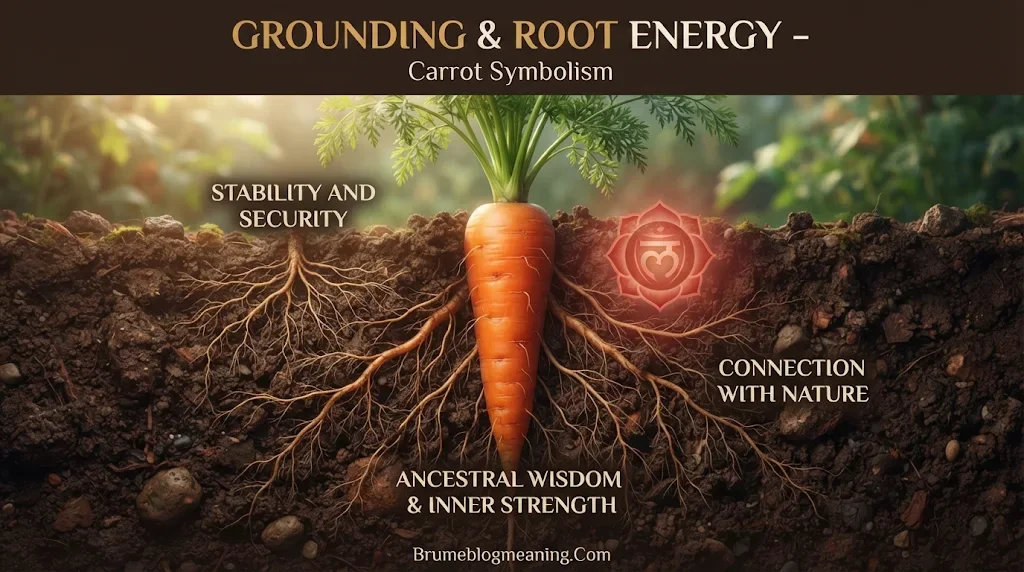
Carrot symbolism points to progress you cannot see yet. A carrot builds its root in the soil while the green top gives few clues.
The carrot is a root vegetable in the Apiaceae family. It is a biennial plant, so it stores energy in its taproot the first year and flowers in the second.
Its color adds meaning too. Orange comes from beta-carotene, and many energy traditions link orange to creativity and confidence.
Carrots were not always orange. Early carrots from Persia were often purple or yellow, and Dutch growers later stabilized the orange type. So transformation is built into the carrot’s own history.
7 Spiritual and Cultural Secrets of Carrot Symbolism
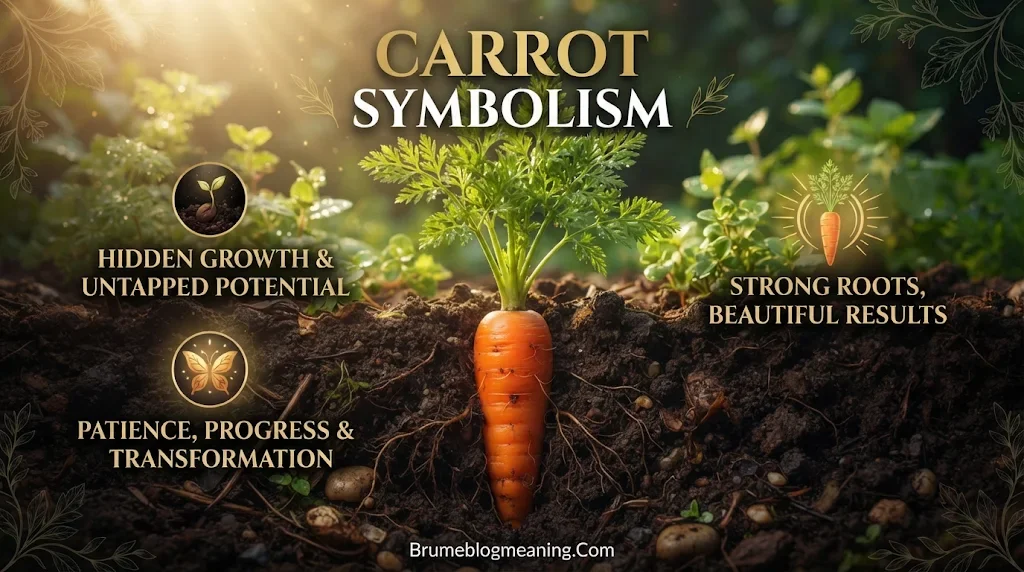
Just as carrots symbolize hidden growth, renewal, and transformation, the signs appearing in the world around us can also carry deeper spiritual interpretations. Similarly, understanding the spiritual meaning of an X in the sky can reveal symbolic messages about important life decisions, divine guidance, balance, and new beginnings.
Each secret below ties a plant fact to a spiritual meaning. Read them as symbols, not as proof.
- Hidden potential: A tiny seed holds a full root. It stands for talent you have not used yet.
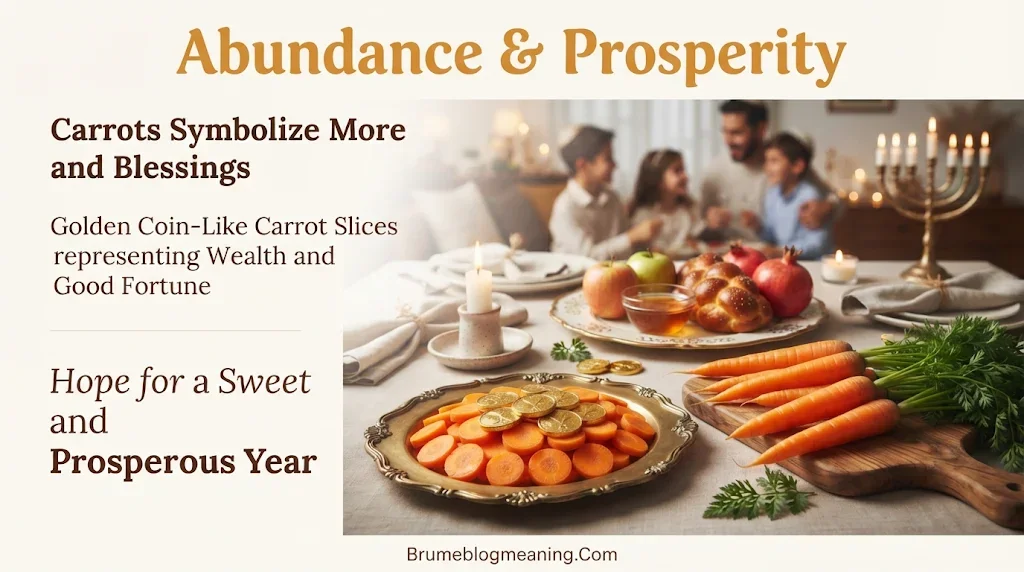
- Abundance and prosperity: In Yiddish, the word for carrot, meren, sounds like the word for “more.” Sliced carrots also look like gold coins, which is why they appear at Rosh Hashanah tables.
- Grounding and root energy: Carrots dig deep for stability. Many people link them to root chakra foods and ancestral wisdom.
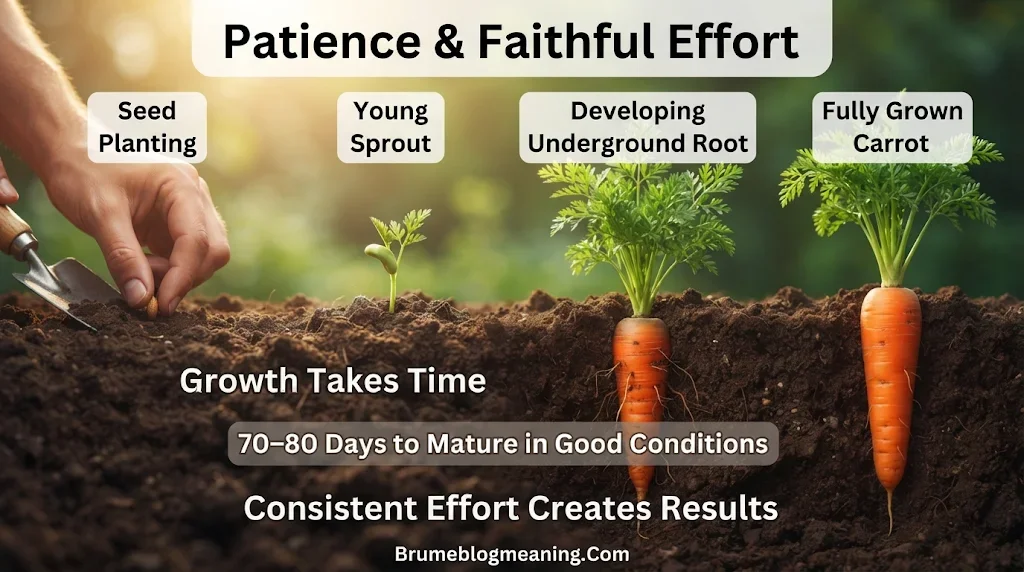
- Patience and faithful effort: A carrot takes about 70 to 80 days to mature in good conditions. You cannot rush it.
- Clarity and discernment: Carrots supply beta-carotene, which the body turns into vitamin A. That link to eyesight made them a symbol of clear vision. One myth needs fixing, though. The WWII claim that carrots gave pilots night vision was propaganda to hide radar.
- Nourishment for body and soul: Only about 3% of beta-carotene in raw carrots is absorbed. Cooking, pulping and adding oil raises that to about 39%. Spiritually, growth often needs heat and pressure.
- Transformation and renewal: Seed, sprout, hidden root, harvest. Each stage is a new phase of change.
Carrot dreams follow the same logic. Planting means a new goal. Harvesting means results are near. A rotten carrot points to neglect.
Jewish tradition adds one more layer. The Hebrew word gezer sounds like g’zar, meaning “decree.” Eating carrots is a prayer for a good decree in the new year.
Carrot Symbolism in the Bible
Is carrot in the Bible? No. The Bible does not name the carrot. The Rosh Hashanah customs above come from Jewish tradition, not from scripture. Meaning of Carrot Symbolism.
Still, the Bible uses root and harvest images often:
- Psalm 126:5: Those who sow in tears will reap with joy.
- Matthew 13: In the parable of the sower, seed in good soil gives a large harvest.
- Jeremiah 17:7-8: People who trust God are like trees with deep roots.
- Isaiah 58:11: The soul is like a well-watered garden.
These verses match what a carrot does. Faith grows in silence before it shows fruit.
The Carrot Analogy: Growth, Reward and Resilience
The carrot analogy has three common meanings. Each is a metaphor, so context matters.
Hidden growth: Real progress often happens out of sight. Think of studying for months before a promotion.
Carrot and stick: This is the idea of using reward and punishment to guide behavior. A dangling carrot is a reward held just out of reach. Example: a bonus offered for hitting a sales goal.
Carrot, egg and coffee bean: In this popular story, boiling water softens the carrot, hardens the egg and changes the water around the coffee bean. The lesson is that hard times affect people differently. The story’s author is unknown.
FAQs
What is the carrot analogy?
It usually means one of three things: growth that happens unseen, a reward used to motivate, or the carrot in the “carrot, egg and coffee bean” story about facing hardship.
Is carrot in the Bible?
No, the carrot is not named in the Bible. The Bible does use planting, roots and harvest as symbols of faith and provision.
What are the spiritual benefits of carrots?
Symbolically, carrots stand for grounding, patience, clarity, abundance and nourishment. On the physical side, a raw carrot is about 88% water, and 100 grams supplies 93% of the daily value of vitamin A.
What does it mean if someone is a carrot?
It is not a formal term. People may use it for a grounded, nourishing person with hidden depth. “Carrot top” is a nickname for red hair. Calling someone a “carrot” can also mean they dangle a reward. The tone depends on context.
Conclusion
The takeaway: the carrot spiritual meaning is simple. Growth you cannot see still counts. Keep planting, stay patient, and trust the harvest.

Abroy Faisal is a content writer and researcher at BrumeBlogMeaning.com, dedicated to helping readers understand the meanings of words, phrases, slang, and trending expressions. He enjoys exploring language, explaining complex terms in simple words, and creating informative, easy-to-read content for a wide audience.